CoolIT AHx240
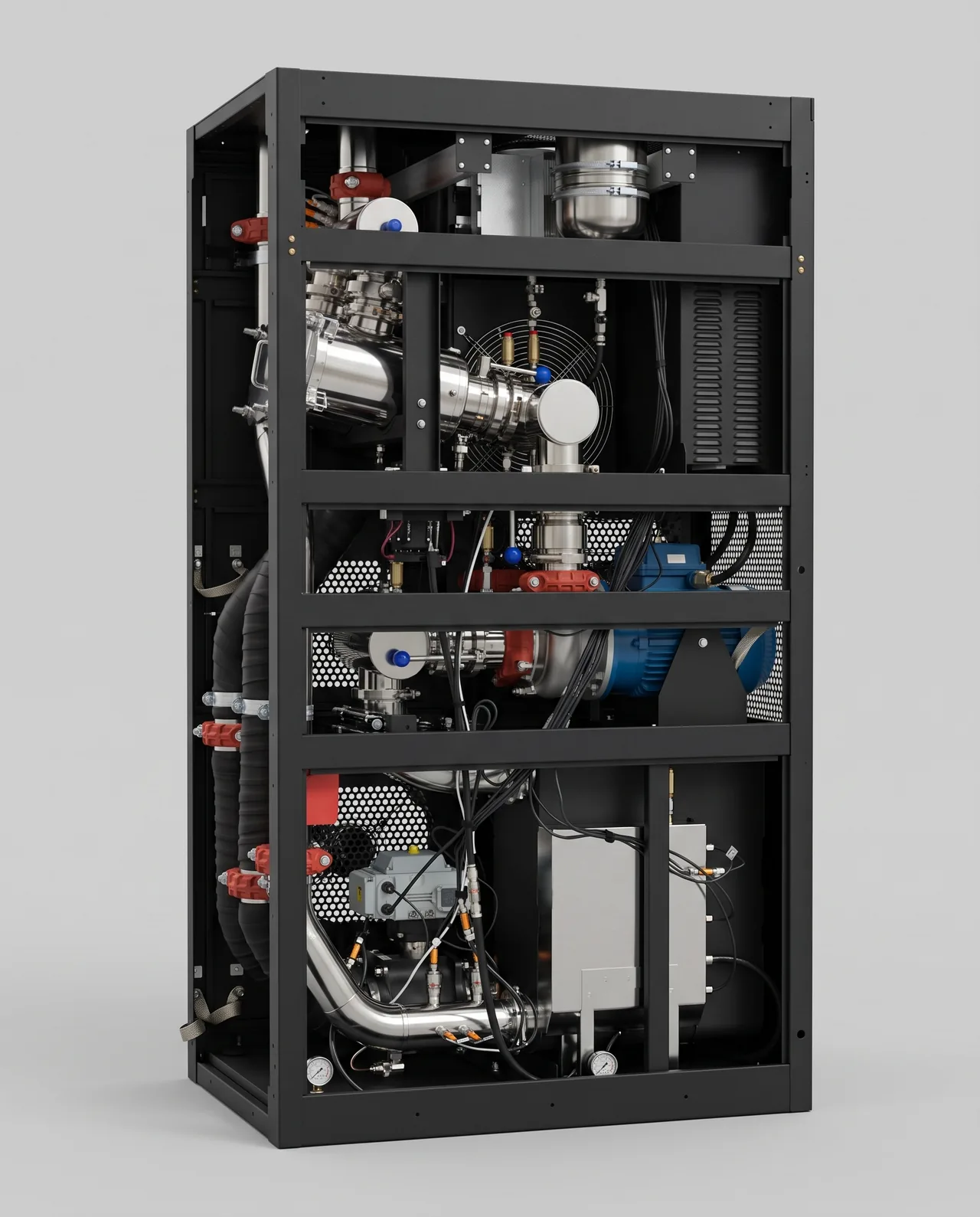
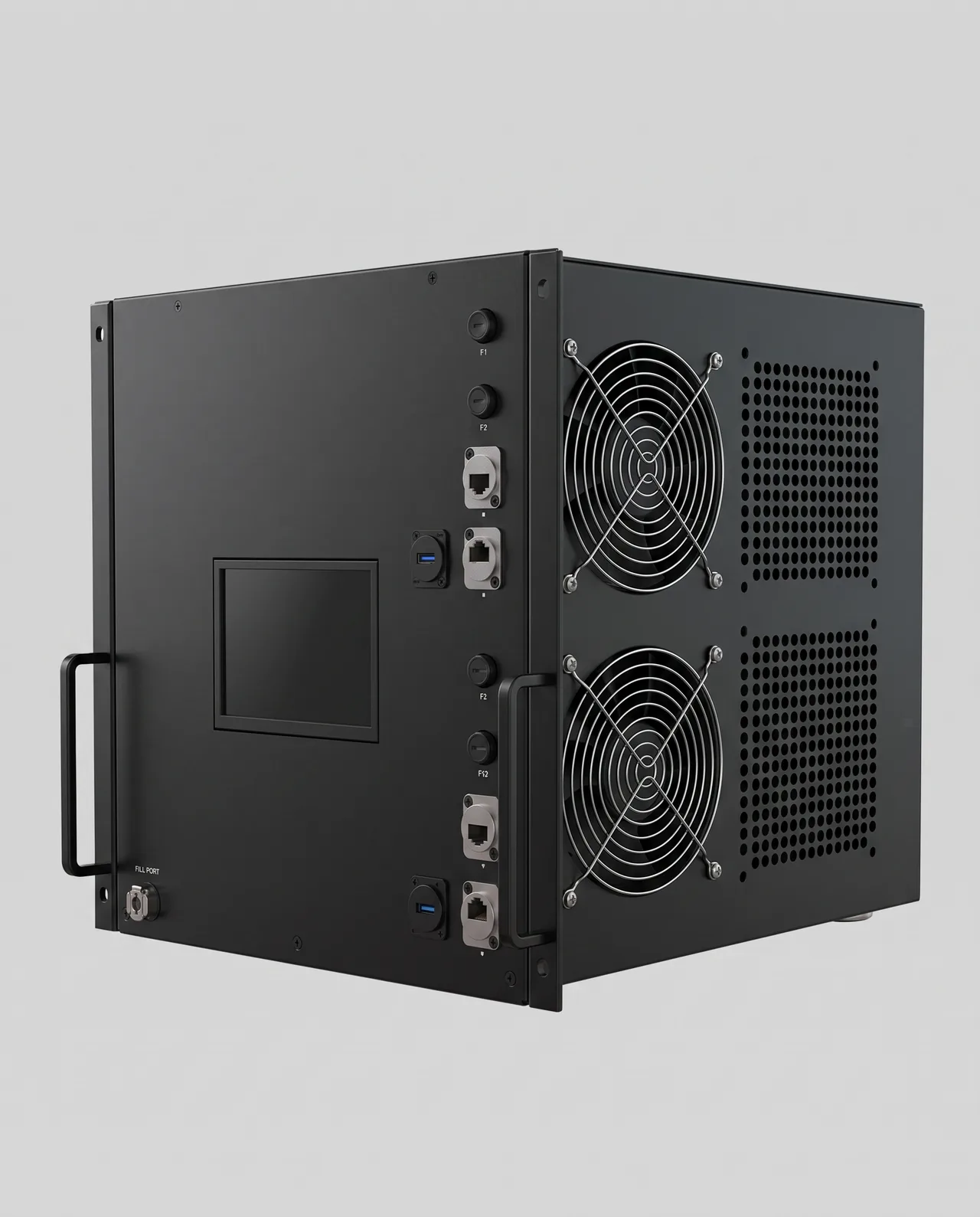
Renders, not photographs. Produced to DC Atlas art direction from the manufacturer’s own product image, so form, panel layout and controls follow the real machine. Vendor branding is deliberately not reproduced.
Specification
20 of 58 publishedType and form
- Heat rejection type
- Liquid to air
- Form factor
- In row
- Supported load types
- Direct to chip
Capacity and rating
- Cooling capacity
- 240 kW
- Approach temperature (at nominal)
- 15 K
Secondary loop
- Secondary (TCS) available external differential pressure
- 241 kPa
- Secondary (TCS) connection size
- 50.8 mm
- Secondary (TCS) connection type
- Sanitary tri clamp
- Secondary (TCS) filtration rating
- 50 micron
Pumps and redundancy
- Number of pumps
- 2
- Pump redundancy
- 2n
- Heat exchanger type
- Air coil
Electrical
- Maximum power consumption
- 15.5 kW
Physical
- Height
- 2,293.3 mm
- Width
- 1,200 mm
- Depth
- 1,199 mm
Control
- Control and monitoring protocols
- Redfish, SNMP
- Leak detection
- Internal
- Dew point control
- Standard
- Multi-unit grouping
- Standard
More Coolant Distribution Units (CDUs)
6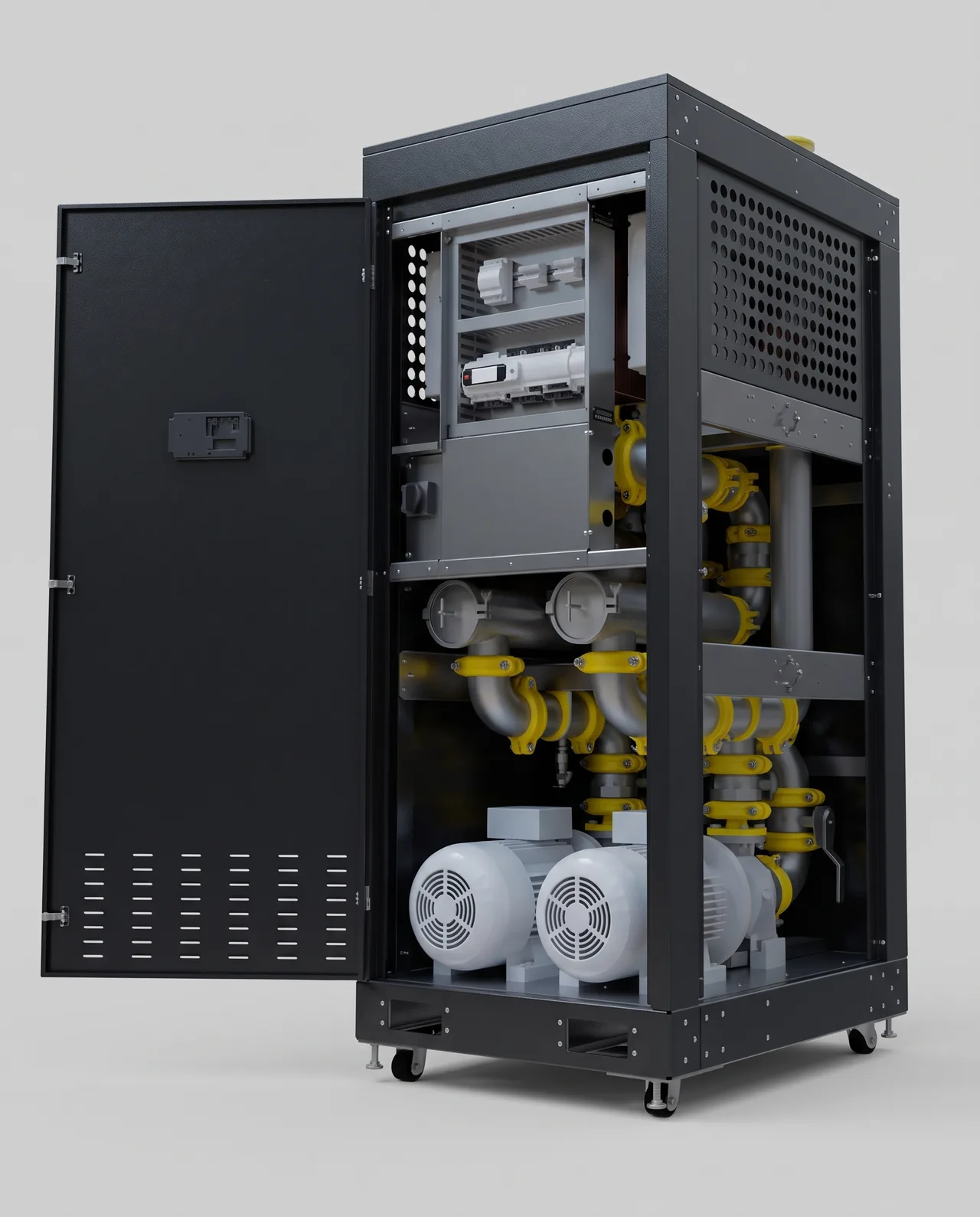 ChilldyneChilldyne CDU-1500
- Capacity
- 1,500 kW
- Rated at
- 4 K approach · 15 K ΔT
- Form
- floor mount
- Heat rejection
- liquid to liquid
- Supply
- 480 V · 3-phase
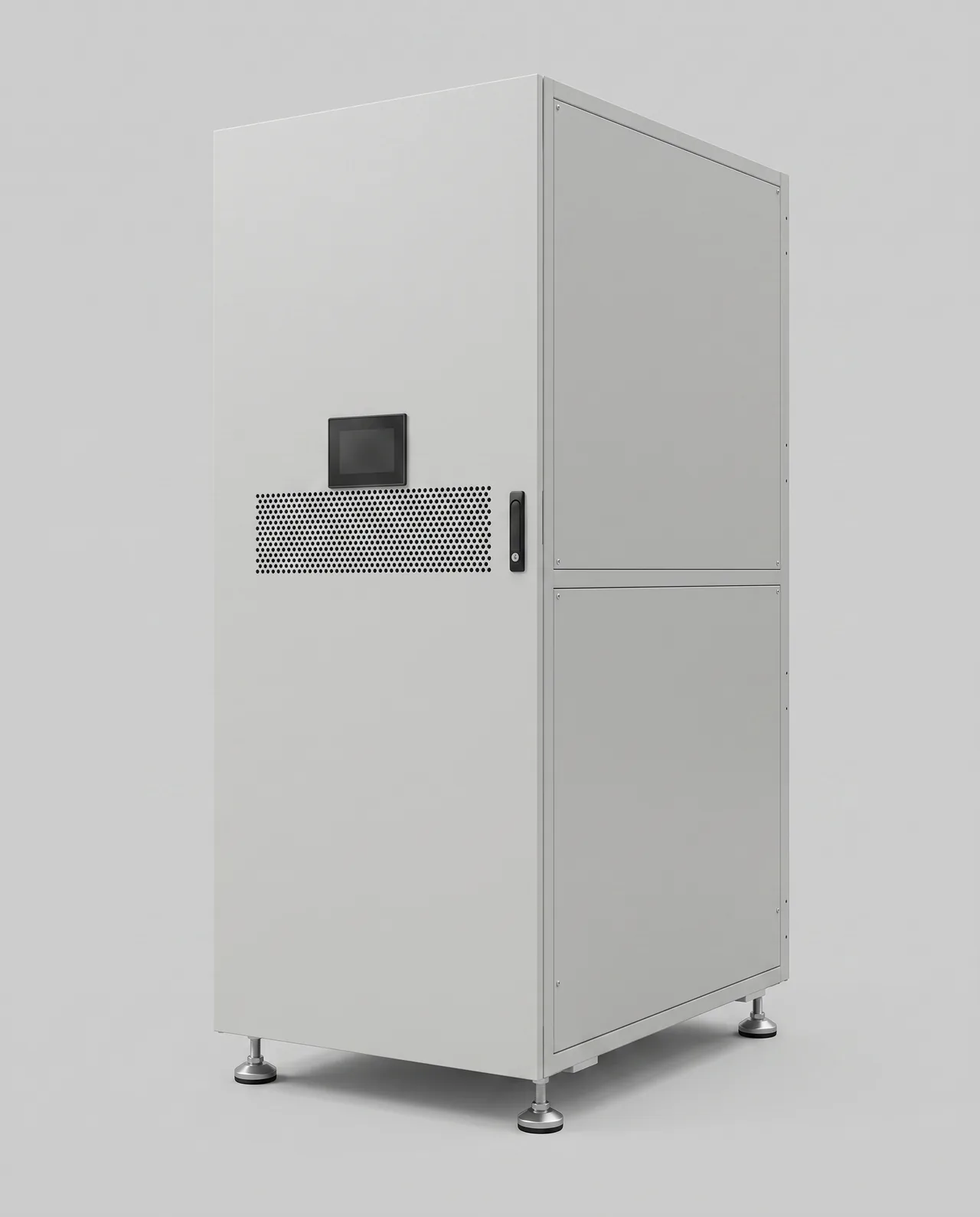 LiquidStackLiquidStack CDU-1MW
- Capacity
- 1,004 kW · max 1,350 kW
- Rated at
- 4 K approach · 10 K ΔT
- Form
- in row
- Heat rejection
- liquid to liquid
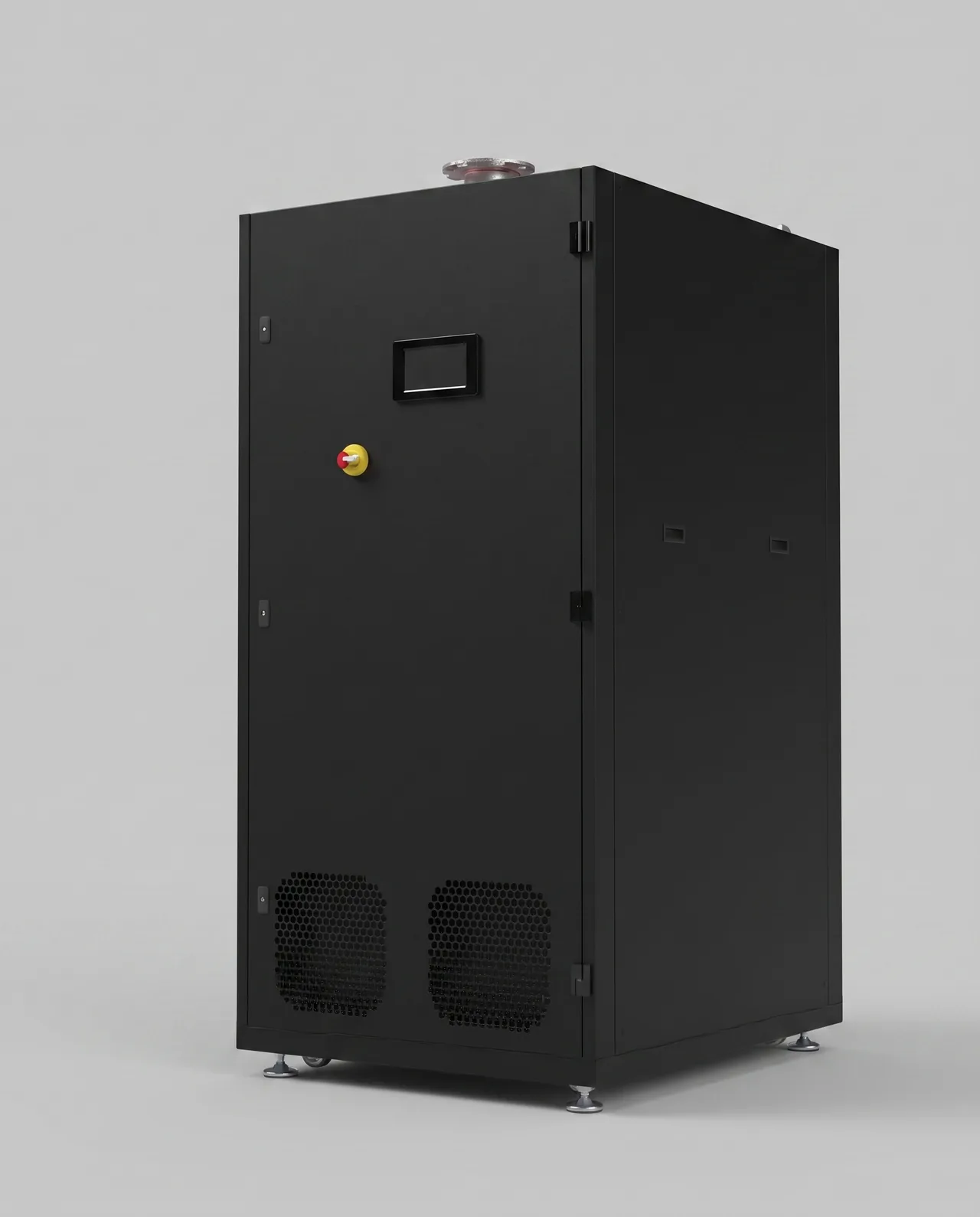 AiredaleAiredale CDU10
- Capacity
- 1,028 kW
- Rated at
- 4 K approach · FWS 27 °C · TCS 31 °C · 10 K ΔT
- Form
- in row
- Heat rejection
- liquid to liquid
- Supply
- 400 V · 3-phase
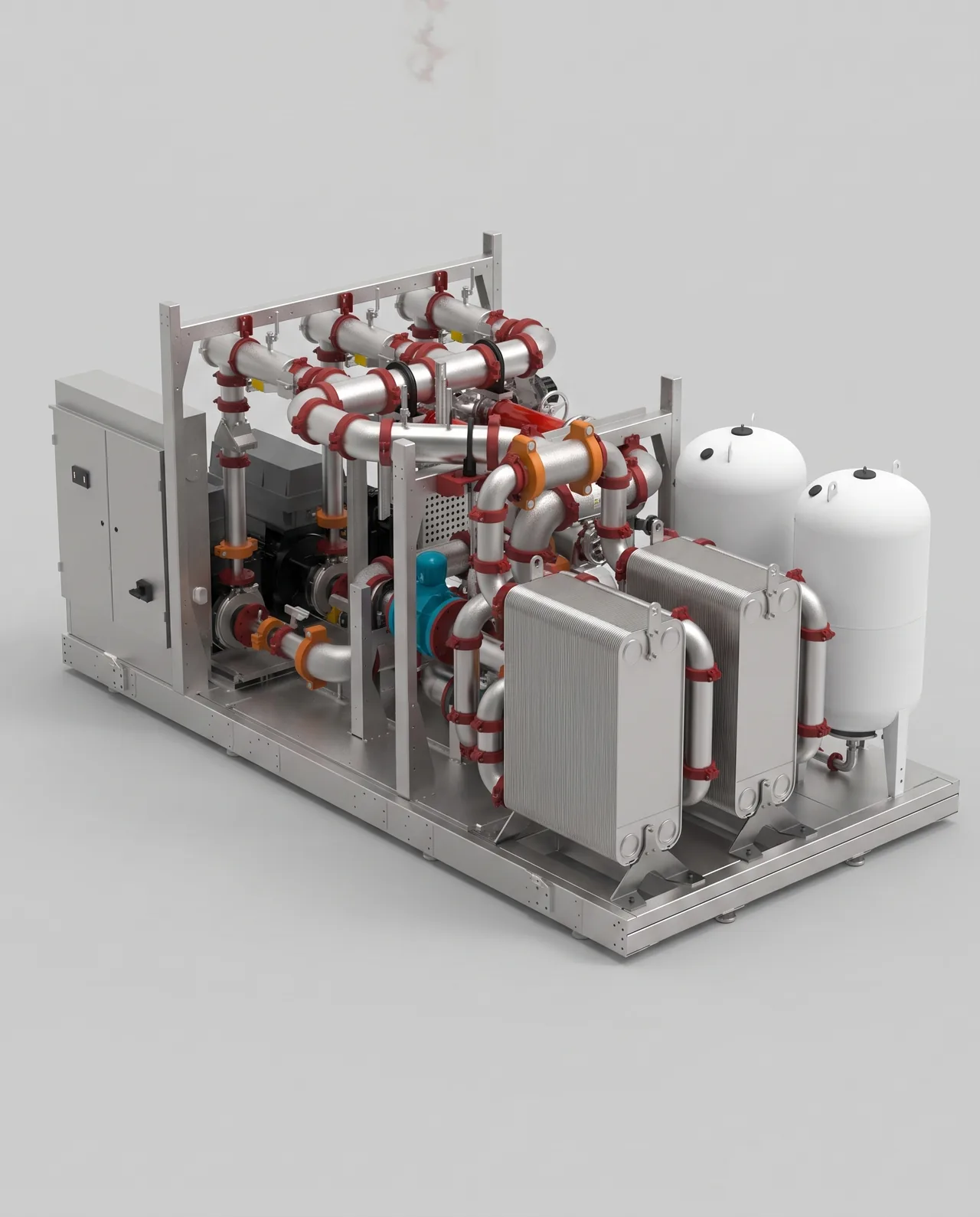 AiredaleAiredale CDU15
- Capacity
- 2,160 kW
- Rated at
- 4 K approach · FWS 27 °C · TCS 31 °C · 10 K ΔT
- Form
- skid
- Heat rejection
- liquid to liquid
- Supply
- 400 V · 3-phase
 CoolIT SystemsCoolIT CHx2000
- Capacity
- 2,000 kW
- Rated at
- 5 K approach
- Form
- in row
- Heat rejection
- liquid to liquid
 VertivVertiv CoolChip CDU 121
- Capacity
- 121 kW
- Rated at
- 4 K approach
- Form
- in rack · 4U
- Heat rejection
- liquid to liquid
- Supply
- 230 V · 1-phase
Renders, not photographs. Product images are generated to DC Atlas art direction from each manufacturer’s own product image, so form, panel layout and controls follow the real machine. Vendor branding is not reproduced. Where a manufacturer publishes no image of an individual model, the render follows another unit in the same range.